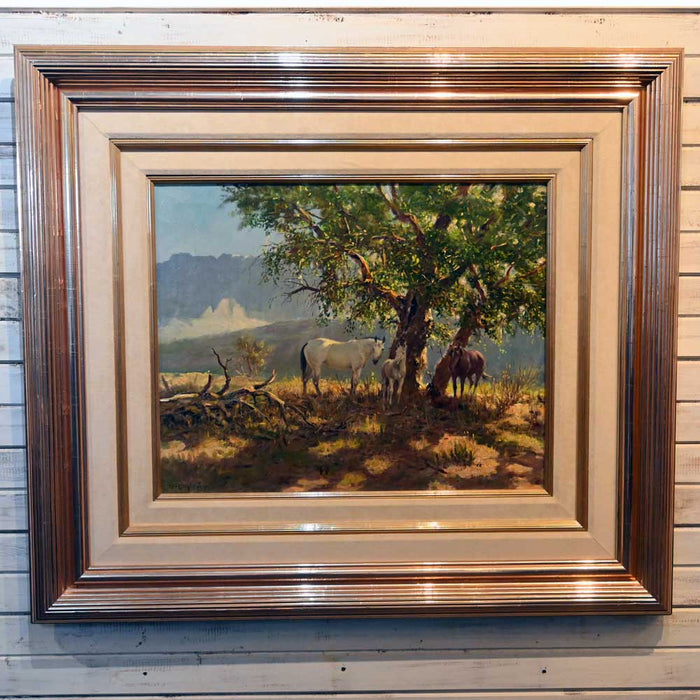


Shade by Olaf Wieghorst
SKU _CA712
Original price
$40,000.00
-
Original price
$40,000.00
Original price
$40,000.00
$40,000.00
-
$40,000.00
Current price
$40,000.00
Experience the true essence of the American West with this stunning work by renowned artist, Olaf Wieghhorst. Shade captures the spirit and rugged beauty of cowboy life in vivid detail. A must-have for any Western art collector!
- Shade
- Oil on Canvas
- Olaf Wieghorst (1899-1988)
- Danish-American, California
- Painting: 23 1/2" X 29 1/2"
- Frame: 30" x 36"
- Signed Lower Left
--------
A shipping deposit will be charged at the time of order and our shipping department will contact you to work on your shipping and insurance needs before the item ships.